Glass or plastic? PPSU or T-Ester? BPA-free labelling on everything, but what does that actually mean? When it comes to choosing a safe bottle for your baby, the material matters far more than most parents realise, and the terminology can make it harder, not easier, to feel confident in your decision.
The good news is that understanding baby bottle materials does not require a science degree. There are a handful of substances that are genuinely worth avoiding, a clear set of safer alternatives, and practical differences between materials that can help you choose what works for your family's lifestyle. Here at Pigeon, all bottles are crafted from BPA-free materials as a baseline, but we also believe parents deserve to understand why that matters, and what the alternatives actually offer.
This guide covers the materials to avoid, the safest options available, and how to choose between them based on how you feed, how often you sterilise, and what matters most to you as a parent.
What Does BPA-Free Actually Mean?
BPA stands for Bisphenol A, a synthetic chemical that was widely used to harden polycarbonate plastics throughout the latter half of the twentieth century. For decades, it appeared in everything from food storage containers to baby bottles. The problem is that BPA does not stay put. It can leach from the plastic into liquids, particularly when bottles are heated, washed with harsh detergents, or sterilised repeatedly with boiling water. [1]
When you see "BPA-free" on a baby bottle, it means the bottle has not been manufactured using polycarbonate plastic. It is a meaningful distinction, but it is also worth knowing that BPA-free alone does not automatically make a bottle safe. The broader material still matters. In Australia, the government announced a voluntary phase-out of BPA in polycarbonate baby bottles in 2010, reflecting growing concern about infant exposure. [2]
All Pigeon baby bottles across both the SofTouch™ and Flexible™ ranges are BPA and BPS free. Here at Pigeon, we go further than the label. The specific materials used in each bottle are chosen for their safety profile, durability, and how they perform under real feeding and sterilisation conditions.
Materials to Avoid in Baby Bottles
When choosing safe baby bottle materials, there are a few specific substances that are worth understanding and actively avoiding.
Bisphenol A (BPA)
BPA is an endocrine disruptor, meaning it can interfere with the body's hormonal system. In infants, whose systems are still developing, even low-level exposure raises concern. It is most commonly found in older polycarbonate plastic bottles, which often have a hard, clear appearance. If a bottle is not clearly labelled BPA-free and was manufactured before 2010, it is worth replacing. Modern bottles from reputable manufacturers, including all Pigeon bottles, will be BPA-free as standard.
Lead
Lead exposure in infants is associated with cognitive and behavioural problems, and there is no known safe level of exposure for young children. Lead is not used in standard baby bottle manufacturing, but it can appear in low-quality glass or decorative finishes on cheap imports. If you are purchasing glass bottles, choose products from established brands with documented quality controls and transparent material sourcing.
Phthalates
Phthalates are a group of chemicals often used to soften plastics and are found in a range of consumer products. As endocrine-disrupting chemicals, phthalates can interfere with hormonal signalling, and infants are particularly vulnerable. Their developmental windows make them more sensitive to disruption from external chemicals. [3] Look for bottles that are explicitly labelled phthalate-free, and avoid products that do not clearly list their material composition. All Pigeon bottles are free from phthalates.
Safe Baby Bottle Materials
Once you know what to avoid, the practical question becomes: which materials are the safest options available, and how do they differ? Here is a breakdown of the three materials used across Pigeon's bottle range.
Glass
Glass is the most straightforward option from a chemical-safety perspective. It is inherently BPA-free, does not absorb odours or staining, and does not leach anything into your baby's milk regardless of temperature. It withstands repeated high-temperature sterilisation without degrading, and because it is non-porous, it stays hygienic over time.
Glass bottles are also environmentally friendly. They are reusable, recyclable, and do not degrade in quality the way plastic can over extended use. The main practical consideration is weight and fragility, which is why many parents use glass bottles at home and opt for plastic alternatives when travelling or on the go.
Here at Pigeon, glass bottles are available across both the SofTouch™ and Flexible™ ranges. The SofTouch™ Glass Bottle 160ml is a popular starting point for newborns, made from borosilicate glass with high heat resistance and excellent clarity. For parents who prefer a slim-neck design, the Flexible™ Glass Baby Bottle 240ml pairs with Flexible™ Peristaltic Teats and is BPA and BPS free.

T-Ester
T-Ester is an innovative plastic material exclusive to Pigeon, developed as part of over 60 years of research into baby's natural sucking behaviour. It offers glass-like clarity for better visibility of milk levels, high resistance to UV degradation making it UV steriliser friendly, and a lightweight profile that many parents find easier to handle than glass.
T-Ester bottles are free from BPA, BPS, lead, and phthalates. The UV steriliser compatibility is a notable practical advantage, as many standard plastics are not suitable for UV sterilisation and can degrade prematurely. T-Ester handles this reliably. The SofTouch™ T-Ester Bottle is the go-to option for parents who want the visual clarity of glass with the convenience and lightness of plastic.

PPSU
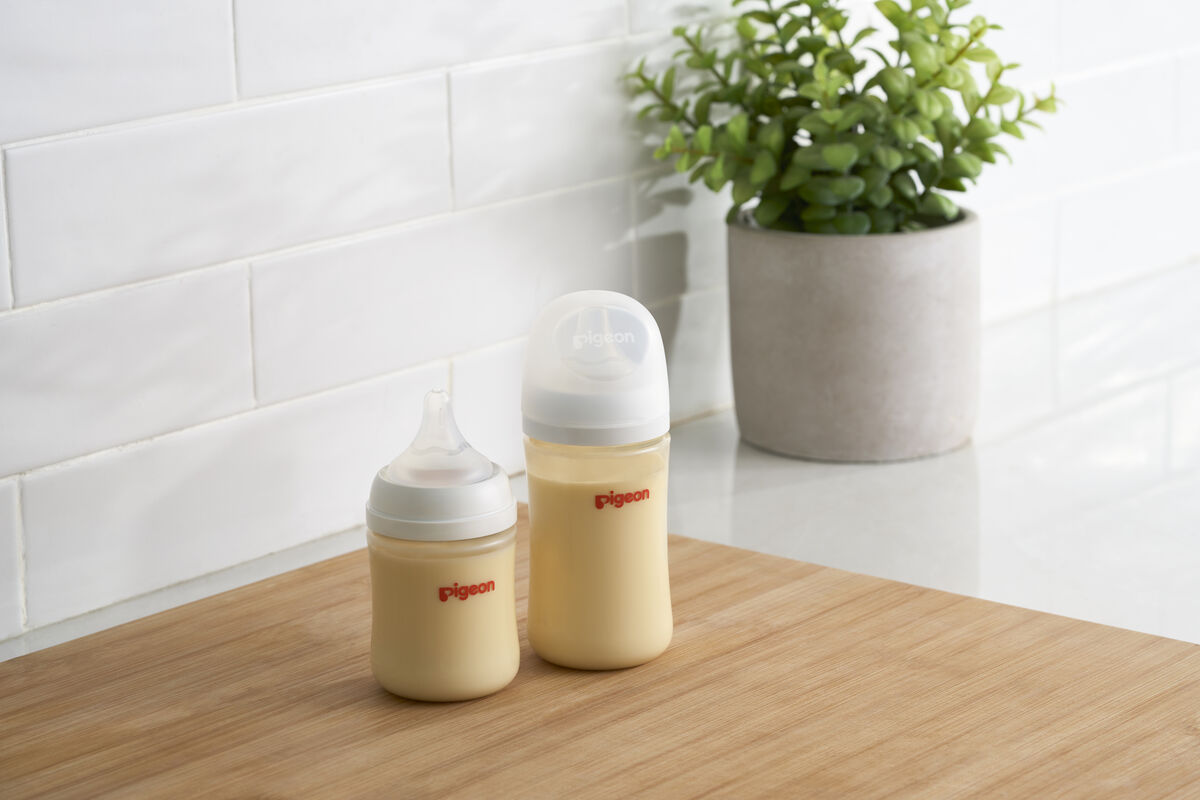
Polyphenylsulfone, or PPSU, is the premium plastic option in Pigeon's range. It can withstand temperatures up to 180°C without warping, discolouring, or degrading, which makes it exceptionally well-suited to parents who bottle feed frequently and sterilise heavily. Unlike standard polypropylene (PP) plastics, PPSU does not become cloudy over time, does not absorb odours or flavour from breast milk or formula, and holds up reliably under daily high-temperature use.
PPSU has a natural honey tone. The colour comes from the material itself, not from any dye or coating, and it is non-toxic, BPA-free, and phthalate-free. It offers a glass-like level of durability and cleanliness in a lighter, shatter-resistant form.
The Flexible™ PPSU Bottle 240ml is a popular choice for families who bottle feed as a primary method, offering a slim-neck design with durable PPSU material. For a wide-neck alternative, the SofTouch™ PPSU Bottle 240ml supports natural latching and is compatible with all SofTouch™ teats. Browse the full PPSU baby bottle range to find the right size and style.

How to Choose the Right Baby Bottle Material for Your Family
Knowing the materials is only half the equation. The right choice for your family depends on how and how often you feed, and what matters most to you day to day.
Choose glass if you prioritise chemical purity above all else and sterilise frequently at home. Glass is the cleanest long-term option and does not degrade with repeated use. It is best suited to home-based feeding routines where portability is less of a concern.
Choose PPSU if you bottle feed as a primary method and need something that handles heavy daily sterilisation without losing its integrity. PPSU is also worth considering if you are using an electric steam steriliser or UV steriliser and want a plastic that performs reliably under high heat.
Choose T-Ester if you want a lightweight, UV steriliser-friendly option with the visual clarity of glass. It is a strong middle-ground for parents who like the look and feel of glass but want something more portable and lighter to handle.
There is no single wrong answer, and many families use a mix of materials depending on the situation. For a more detailed comparison of every bottle material across both the SofTouch™ and Flexible™ ranges, our glass vs. plastic baby bottle comparison walks through the differences and helps you find the right fit. And if you are not sure where to start, the full range of Pigeon baby bottles includes clear material labelling on every product so you can make an informed choice.
What Parents are Saying
The only baby bottles you need!
If you’re looking for a safe, high-quality feeding bottle for your newborn, the Pigeon SofTouch Glass Bottle 160ml is a fantastic choice. It's reliable, thoughtfully designed, and offers great comfort for both baby and parent.
Britney, PIGEON SOFTOUCH BPP BOTTLE GLASS 160ML
Fantastic Bottles
I have bought a lot of Pigeon's flexible bottles of different colours and sizes for feeding our pet lambs the last two years.
They are fantastic! Easy to use, hold and even to clean. And they're still right to go for next year's lambs!
These bottles have been a life changer after the constant need to replace bottles from Woolworths or Target that just keep breaking up.ClaireG, Flexible™ Bottle PP 120ml
Related Reading
- Glass vs. Plastic Baby Bottles: What's the Difference?
- Why Feeding Flow Is Important for Newborns
- A Guide to Transitioning from Breastfeeding to Bottle Feeding
- The Difference Between Learning to Sip and Learning to Drink
FAQs About Safe Baby Bottle Materials
What baby bottle materials should I avoid?
Avoid bottles made from polycarbonate plastic, which may contain BPA, as well as any bottles that list phthalates or PVC in their materials. If a bottle is not clearly labelled BPA-free, it is worth checking before purchasing. Here at Pigeon, all bottles across the SofTouch™ and Flexible™ ranges are BPA, BPS, and phthalate free as standard.
Is glass or plastic safer for baby bottles?
Both can be safe choices when they are free from BPA, phthalates, and other harmful substances. Glass is naturally chemical-free, does not absorb odours, and offers excellent heat resistance. Premium-grade plastics like PPSU offer comparable safety with the added benefit of being lightweight and shatter-resistant. The best choice depends on your lifestyle and feeding frequency. Our glass vs. plastic baby bottle comparison covers this in full detail.
What is T-Ester and is it safe for babies?
T-Ester is an innovative plastic material exclusive to Pigeon. It offers glass-like clarity, high resistance to UV degradation, and is free from BPA, BPS, lead, and phthalates. It is UV steriliser friendly, which is a key advantage over many other plastic materials. You can explore the full range via the SofTouch™ T-Ester Bottles collection.
What is PPSU and why is it used in baby bottles?
PPSU (Polyphenylsulfone) is a premium-grade plastic that can withstand temperatures up to 180°C without warping or degrading, making it ideal for repeated sterilisation. It has a natural honey tone from the material itself with no added dyes, and is non-toxic, BPA-free, and resistant to odours and staining. It is particularly suited to parents who bottle feed frequently. Browse Pigeon's PPSU baby bottle range to find the right size and style for your family.
How do I sterilise baby bottles safely?
The safest sterilisation method depends on the bottle material. Glass and PPSU bottles handle boiling, steam sterilisation, and UV sterilisation reliably. T-Ester bottles are also UV steriliser friendly. Standard PP bottles can be steam-sterilised but are not recommended for repeated UV sterilisation. Always check the manufacturer's guidelines for your specific bottle. All Pigeon baby bottles include material-specific care instructions.