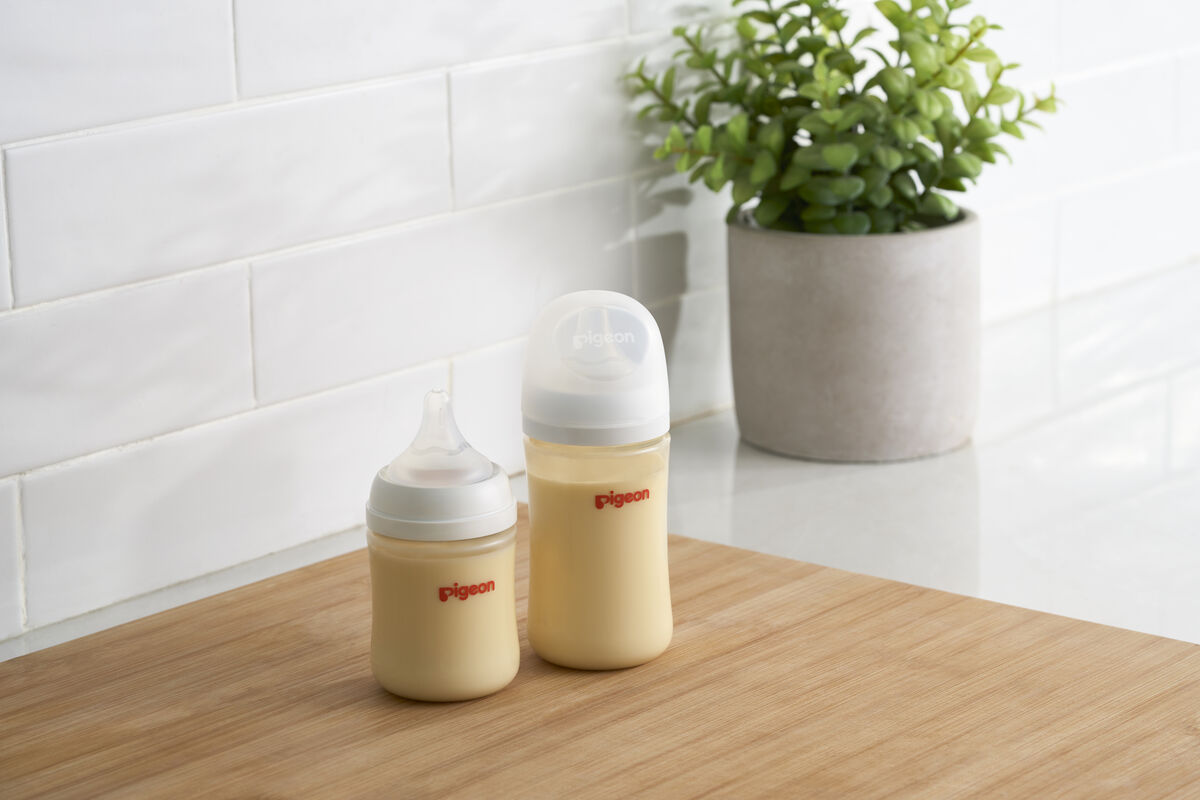
Choosing a baby bottle can feel overwhelming, but one of the most important decisions is the neck design. Here at Pigeon, we offer two distinct bottle shapes: wide-neck and slim-neck designs. Each has unique advantages that suit different feeding situations, baby preferences, and lifestyle needs. Understanding the differences between these two options will help you make a confident choice.
What Are Wide-Neck and Standard-Neck Bottles?
When you're shopping for baby bottles, you'll notice they come in two primary designs. Wide-neck bottles (like Pigeon's SofTouch™ range) have a broader opening that more closely mimics the shape of a mother's breast. Slim-neck bottles (like Pigeon's Flexible™ range) follow a more traditional bottle design with a narrower opening. This simple difference in shape creates meaningful variations in how babies latch, feed, and interact with the bottle.
Wide-Neck Bottles: Designed for Natural Feeding Transitions
How Wide-Neck Bottles Work
Pigeon's wide-neck SofTouch™ bottles feature a wider opening at the top that closely resembles the shape of a mother's breast. This design isn't just aesthetic—it's functionally important for how your baby feeds. The breast-like shape helps your baby achieve a natural latch similar to breastfeeding, which can reduce confusion when moving between breast and bottle. While wide-neck designs are often marketed as breast-like, recent research reveals that scientific evidence supporting these specific design claims is limited. [1] That said, parents do report practical benefits in supporting breastfeeding transitions.
When to Choose Wide-Neck Bottles
Wide-neck bottles are ideal for several feeding scenarios:
Combination Feeding: If you're both breastfeeding and bottle-feeding, a wide-neck bottle helps maintain consistency. Your baby uses similar tongue movements and latch positioning at the breast and bottle, making transitions smoother.
Weaning from Breast to Bottle: When it's time to introduce or transition to bottle-feeding, wide-neck bottles bridge the gap. The familiar shape encourages your baby to accept the bottle more readily.
Reluctant Bottle Feeders: Some breastfed babies resist bottles initially. The breast-mimicking design of wide-neck bottles often helps reluctant feeders accept bottle-feeding with less resistance.

Advantages of Wide-Neck Bottles
Natural Latch and Tongue Movement: The wide-neck design encourages the same tongue movements your baby uses at the breast, supporting healthy oral development and reducing nipple confusion. The SofTouch Peristaltic Plus teats that accompany these bottles have a textured surface that guides proper tongue positioning.
Easier Cleaning and Filling: The wider opening makes filling your bottle faster and cleaning more thorough. You'll have better visibility inside the bottle and easier access for bottle brushes, reducing the risk of milk residue.
Versatile Teat Compatibility: SofTouch wide-neck bottles are compatible with six different teat sizes (SS, S, M, L, LL, LLL) and multiple flow options. As your baby grows from newborn to toddler, you can easily swap teats without changing bottles.
Advanced Air Ventilation System: All SofTouch bottles include the Air Ventilation System (AVS), which adjusts air pressure inside the bottle to support steady milk flow and help reduce colic.
Multiple Material Options: SofTouch bottles come in PP, PPSU, glass, and T-Ester, giving you flexibility based on your priorities for durability, sustainability, and cost.
Disadvantages of Wide-Neck Bottles
Limited Accessory Compatibility: Some bottle warmers and sterilisers are designed for standard-sized bottles and may not accommodate the wider opening. Before purchasing, check that your steriliser or warmer is compatible with wide-neck bottles.

Standard Neck Bottles (Pigeon Flexible™)
How Standard-Neck Bottles Work
Pigeon's standard-neck Flexible™ bottles follow a traditional bottle design with a narrower neck. While they don't mimic the breast shape, they offer other practical advantages. The double-thickness silicone teats provide softness and flexibility, and a unique venting system minimises air intake to reduce colic.
When to Choose Standard-Neck Bottles
standard-neck bottles work best in these situations:
Exclusively Bottle-Fed Babies: If your baby is not breastfeeding, there's no need for a breast-mimicking design. Standard-neck bottles work beautifully for formula-fed or exclusively bottle-fed babies.
Tiny or Premature Babies: Smaller babies sometimes find the narrower teat easier to latch onto comfortably. The streamlined design can feel more manageable in tiny mouths.
High Portability Needs: If you're frequently out and about, standard-neck bottles are lighter and more compact than some wide-neck options, fitting easily into nappy bags and car seats.
Accessory Compatibility Matters: If you've already invested in a bottle warmer, steriliser, or other accessories, slim-neck bottles are more likely to fit standard models.

Advantages of Standard-Neck Bottles
Enhanced Portability: Standard-neck bottles are typically more compact and lighter than wide-neck bottles, making them easier to carry during outings or when you're away from home.
Excellent Accessory Compatibility: These bottles fit most standard bottle warmers, sterilisers, and other baby feeding accessories. This compatibility matters if you already own specific equipment or plan to purchase common brands.
Easier for Babies to Grip: As your baby grows and becomes interested in holding their own bottle, the narrower neck can be easier for little hands to grasp and manage.
Soft, Flexible Design: The Flexible Peristaltic teats are made with double-thickness silicone for added softness, promoting a comfortable latch and natural sucking motion.
Multiple Material Options: Flexible bottles are available in PP, Clear PP, PPSU, glass, and T-Ester, offering choices for different priorities and budgets.
Effective Colic Reduction: The unique venting system on Flexible teats helps minimise swallowed air, supporting comfortable feeding and reducing colic discomfort.
Disadvantages of Standard-Neck Bottles
Breastfeeding Transition Challenges: The narrower neck design doesn't mimic the breast shape, which can make transitions from breast to bottle more challenging for some babies. If your baby is breastfed or combination-fed, a wide-neck bottle may be a better choice.
How to Choose Between Wide-Neck and Standard-Neck Bottles
Selecting the right bottle design depends on your specific situation. Here are key factors to consider:
Your Feeding Method: If you're breastfeeding or combination feeding, a wide-neck bottle's breast-like design provides real advantages. If you're exclusively bottle-feeding, either design works equally well. Both designs offer genuine advantages. Research shows that bottle and teat characteristics affect infant feeding and milk intake, but the interaction between parent and infant matters equally or more. [2] This means your feeding approach and responsiveness to your baby's cues are just as important as the bottle design you choose.
Your Baby's Preferences: Every baby is unique. Some take to either design seamlessly, while others show clear preferences. Many parents find it helpful to try both styles before committing to larger quantities.
Your Lifestyle and Portability Needs: If you're frequently out of the house, standard-neck bottles' compact size and lighter weight matter more. If most feeding happens at home, portability is less critical.
Your Existing Equipment: Check whether you already own bottle warmers or sterilisers. Wide-neck bottles may not fit standard models, while standard-neck bottles are more universally compatible.
Your Baby's Age and Size: Newborns and especially premature or small babies sometimes latch better on standard-neck teats. Larger babies often manage either design comfortably.
Long-Term Feeding Plans: Consider how long you plan to bottle-feed. If you're exclusively bottle-feeding from birth, standard-neck bottles may be more practical. If breastfeeding is primary and bottles are supplementary, wide-neck makes more sense.
Many Parents Choose Both
Here's a practical insight: many parents don't have to choose just one. Some families find that having both wide-neck bottles at home for primary feeding and slim-neck bottles for outings works perfectly. This approach gives you the best of both designs.
Related Reading
To deepen your understanding of baby bottle selection and feeding, explore these related articles:
- How to Introduce a Bottle to Your Breastfed Baby
- Choosing the Right Teat Flow: A Step-by-Step Guide
- Breastfeeding to Bottle: Tips for a Smooth Transition
- Bottle Acceptance: Expert Tips to Help Your Baby Transition Smoothly
- Why Newborn Feeding Flow is Important for Newborns
What Parents Are Saying
Highly Recommend - helped reduce colic symptoms
My son had extremely bad colic, crying for most of the day and had a minor tongue tie. Before purchasing the pigeon flexible bottle, we were using another popular brand bottle and the teat was so large and round the he would could not latch on to the teat, resulting in him gulping more air and the milk running out of his mouth which exasperated his colic. I changed bottles to the pigeon flexible bottle, and instantly noticed a difference. My son was able to have a tight latch around the teat due to the ribbed design and shape resulting in less air being consumed and because of how the teat is designed limited the amount of air entering his mouth. We could not be happier with this product and I am always recommending this bottles to anymore needed to bottle feed their infant. We initially brought the low use pigeon version of this bottle but have since upgraded to the PPSU version as we use these bottles a lot.
- Gigi, Flexible™ Bottle PPSU 240ml
Great wide glass bottle
I really wanted glass bottles and this was recommended to me by my lactation consultant. I really love the wide neck. Great bottle!
- Shikha, SofTouch™ BPP Bottle Glass 240ml
FAQs About Wide-Neck vs Slim-Neck Baby Bottles
Can I use wide-neck teats on standard-neck bottles or vice versa?
No. Wide-neck and standard-neck teats are not interchangeable. Pigeon's wide-neck (SofTouch™) teats are designed exclusively for wide-neck bottles, and standard-neck (Flexible™) teats are designed for standard-neck bottles. Always match your teats to your bottle design for proper fit and safety.
Will my baby refuse one design if they're used to the other?
It depends on your baby. Some babies transition easily between bottle designs, while others show a clear preference. If you're making a switch, introduce it gradually and give your baby time to adjust. If your baby strongly prefers one design, it's best to stick with that choice.
Are wide-neck bottles worth the investment if my baby is formula-fed?
Wide-neck bottles offer excellent features like easier cleaning and advanced air ventilation, which benefit all babies regardless of feeding method. However, a randomised controlled trial found no significant differences in infant growth, milk intake, or colic between different bottle designs. [3] This suggests that if your baby feeds well with a standard-neck bottle, switching isn't necessary.
How do I know if my steriliser will fit my bottles?
Check your steriliser's product specifications or manual for compatible bottle sizes and designs. Most modern sterilisers accommodate both designs, but some older models or compact sterilisers may not fit wide-neck bottles. When in doubt, contact the steriliser manufacturer.
Can I combine wide-neck and standard-neck bottles in my feeding routine?
Yes. Many parents successfully use both designs—for example, wide-neck bottles at home for primary feeding and standard-neck bottles for outings. Just remember to use the correct teats with each bottle design.
Which design is better for preventing colic?
Both designs include effective anti-colic systems. Wide-neck bottles feature the Air Ventilation System (AVS™), while standard-neck bottles include a unique venting system. Both are proven to reduce air intake and minimise colic discomfort. The key is using the correct teat size for your baby's age and watching for signs they're ready to move up.