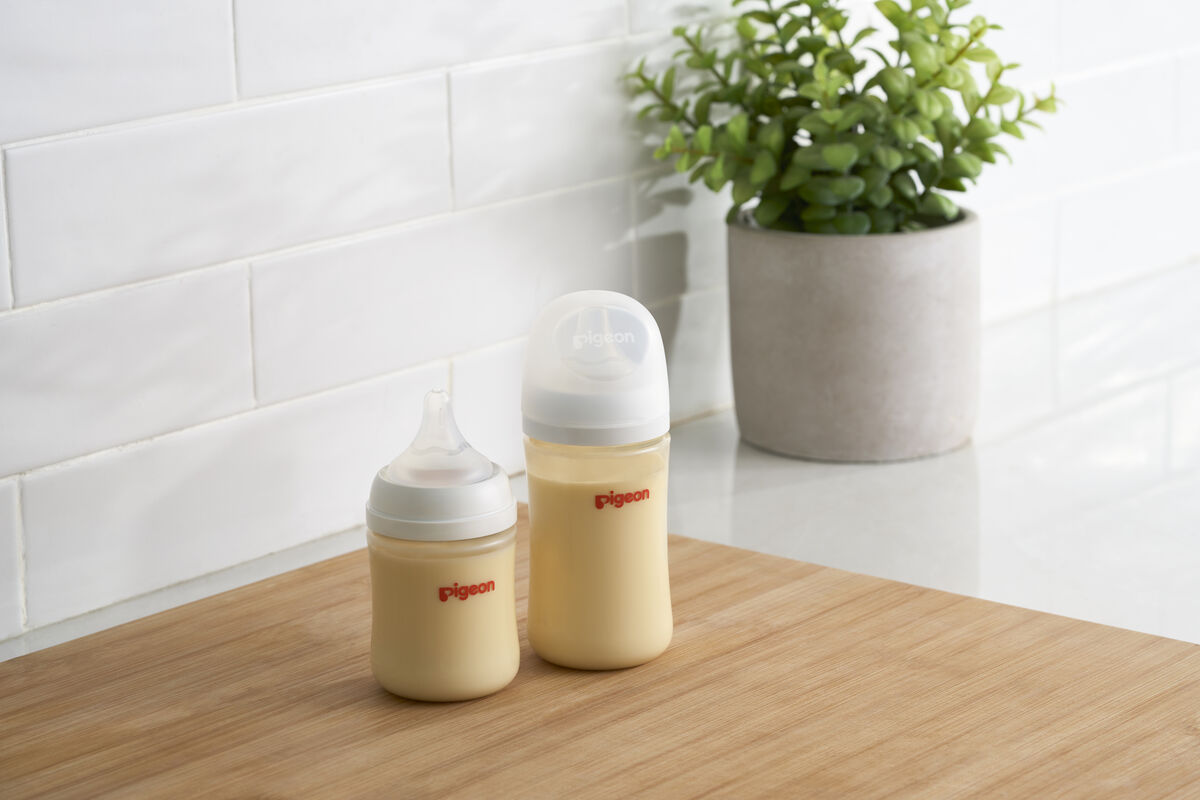
Choosing a baby bottle might feel like an impossible decision. Should you go with glass or plastic? Wide-neck or slim-neck? Round-hole or cross-cut teats? With so many options available, it's easy to feel overwhelmed before you've even started. But here at Pigeon, we know that finding the right bottle for your baby doesn't have to be complicated. By understanding a few key factors, you'll be able to navigate the choices confidently and find a bottle that works beautifully for your family.
Understanding Your Baby's Feeding Needs by Age
The volume your baby drinks changes significantly over their first year, which is why bottle size matters. When you're choosing the right bottle for your baby, age and developmental stage are your first guides.
Newborns have tiny stomachs and feed frequently. In the early days, your baby will only drink about 1 to 2 ounces per feed. As your baby grows, this increases rapidly. By around 2 months, most babies drink 120 to 150 millilitres every 3 to 4 hours.
According to the CDC, formula-fed babies typically need about 1 to 2 ounces every 2 to 3 hours in their first few days, progressing to around 3 to 4 ounces per feed by the end of the first month. [1] As your baby reaches 6 months, they'll typically consume 6 to 8 ounces at each feed, spaced throughout the day.
This is why here at Pigeon, we recommend starting with a smaller bottle (around 160 millilitres) in the newborn stage and progressing to larger bottles (240 to 330 millilitres) as your baby grows. Starting your baby with an appropriately sized bottle prevents waste and makes handling easier during those early, bleary-eyed feeds.
Bottle Materials: Exploring Your Options
One of the most important decisions you'll make is selecting a bottle material. Each option has distinct advantages, and understanding them will help you choose the right bottle for your baby's needs and your lifestyle.
Polypropylene (PP) Bottles
PP is a lightweight plastic that's affordable and ideal for everyday use. Pigeon's PP bottles are BPA-free and suitable for regular to frequent use. They're perfect for parents who want a budget-friendly option that doesn't compromise on safety or quality. PP bottles are lightweight and durable, making them easy to take on outings. The main consideration is that PP bottles can become slightly cloudy over time with repeated sterilisation, though this doesn't affect performance.

PPSU Bottles: Premium Durability
PPSU is a medical-grade plastic that offers exceptional durability. Pigeon's PPSU bottles have a naturally honey-toned colour and can withstand heat up to 180°C, making them ideal for frequent sterilisation. If you're planning to bottle-feed regularly or for an extended period, PPSU offers better heat resistance than standard PP. They resist staining, odours, and don't absorb flavours, so they stay fresher-looking longer. PPSU is the choice for parents who prioritise durability and are willing to invest in a premium option. We recommend replacing PPSU bottles every 12 months with regular use.

T-Ester Bottles: Glass-Like Clarity, Plastic Practicality
T-Ester is an innovative material exclusive to Pigeon. Our T-Ester bottles deliver the visual appeal of glass with exceptional clarity, combined with the durability of plastic. Unlike other plastic bottles, T-Ester is UV steriliser-friendly, making it perfect for parents using UV sterilisation methods. It has excellent resistance to degradation, so it stays clear even with frequent use. T-Ester combines the best of both worlds—you get glass-like visibility to monitor your baby's intake, without the weight or fragility. This is an excellent choice if you want premium clarity and UV sterilisation compatibility.

Glass Bottles: The Long-Term Investment
Glass is a timeless choice for parents who prioritise chemical-free feeding and environmental sustainability. Pigeon's glass bottles are made from borosilicate glass, which is heat-resistant and non-porous. Glass doesn't absorb odours or stains, so your bottle looks and smells fresh wash after wash. Glass bottles can last indefinitely with proper care, making them a sustainable choice. The main trade-off is weight—glass is heavier than plastic, which matters if you're frequently on the move. Glass also requires more careful handling to prevent breakage. Many parents find glass works beautifully at home and choose plastic for outings.

Teat Sizes and Flow Rates: Supporting Your Baby's Development
Choosing the right teat is just as important as choosing the bottle. Teats come in different sizes and flow rates, each designed to support your baby's feeding ability at different developmental stages. Here at Pigeon, we offer two main teat collections to match your feeding approach.
SofTouch Peristaltic Plus Teats: Wide-Neck Design for Breast-to-Bottle Transition
Pigeon's SofTouch Peristaltic Plus Teats feature a wide-neck design that mimics the shape of a mother's breast. This design is particularly valuable if you're combining breast and bottle feeding, as it helps reduce nipple confusion and supports a natural latch. The textured surface provides grip for your baby's tongue, encouraging the correct tongue position during feeding. All SofTouch teats include an Air Ventilation System (AVS) that adjusts air pressure inside the bottle, supporting steady milk flow and helping to reduce colic. SofTouch teats come in six sizes: SS (for newborns from 0 months), S (from 1 month), M (from 3 months), L (from 6 months), LL (from 9 months), and LLL (from 15 months).

Flexible Peristaltic Teats: Slim-Neck Design with Double Thickness
Our Flexible Peristaltic Teats offer a slim-neck design with double-thickness silicone for added softness and flexibility. These teats also feature a unique venting system to minimise swallowed air and reduce colic. Flexible teats are ideal if you prefer a traditional bottle shape that's easy to grip or if you're exclusively bottle-feeding. They come in four sizes: S (for newborns), M (from 4 months), Y (from 6 months), and L (from 9 months). The Flexible range is a fantastic choice for parents who want simplicity and excellent functionality without the wide-neck design.

Round-Hole Versus Cross-Cut Teats: What's the Difference?
Beyond size, teats also differ in the shape of their opening, which affects milk flow. Round-hole teats provide a consistent, faster flow because milk will drip out even without sucking. These are ideal for newborns who have limited jaw strength and need milk to flow with minimal effort. As your baby's jaw muscles develop and strengthen, cross-cut (or Y-cut) teats become more appropriate. With Y-cut teats, milk only flows when your baby actively sucks, allowing them to control the flow themselves. This shift encourages active feeding and helps your baby develop healthy sucking patterns as they mature.
Three Signs Your Baby Needs a Bigger Teat Size
Choosing the right teat size is essential for smooth, enjoyable feeding. Watch for these three signs that it might be time to move your baby up to the next size.
Frustration During Feeding: If your baby becomes fussy, impatient, or cries while feeding, it often signals they're struggling to get enough milk. This frustration can lead to longer feeding times and diminished enjoyment for both you and your little one.
Extended Feeding Times: While feeding times vary, if your baby consistently takes more than 20 minutes to finish a bottle, they may be working too hard to extract milk from a slow-flow teat. This extra effort can be tiring and lead to feeding fatigue.
Strong Sucking and Teat Collapse: If you notice your baby sucking very hard or see the teat collapsing inward during feeds, this indicates they need a faster-flow teat. Teat collapse happens when your baby is creating a vacuum by sucking hard—a clear sign they need the next size up.
Remember: there's no one-size-fits-all timeline for changing teat sizes. Every baby develops their feeding skills at their own pace. If you're unsure whether it's time to move up a size, consult your paediatrician for personalised guidance.
Special Feeding Considerations: Supporting Babies with Cleft Palate
Babies born with cleft palate or cleft lip may find standard bottle teats challenging, as the mouth cannot close off from the nose. At Pigeon, we recognise this unique need and offer specially designed bottles that provide support and comfort for babies with cleft palate. If your baby has been diagnosed with cleft palate or cleft lip, speak with your healthcare provider about feeding options tailored to your baby's needs.
What Parents Are Saying
Great bottle
The best bottles! My baby took these bottles straight from birth with no nipple confusion. Made feeding so much easier and able to be shared. Plus the cute designs are a bonus!
Great bootle
I’ve tried a few bottles and got recommended to try this bottle by a friend and I’m so grateful…
I breastfeed my baby majority of the time. I pump milk to give my bubs when we’re out or even if she just needs a top up and these bottles just work.
No issues with getting her to take this bottle. This bottle doesn’t leak and most importantly no nipple confusion.
I only bought 3 to try and I’ll definitely be buying more of these bottles.Frankie, Flexible™ Bottle PPSU 240ml
Related Reading
To deepen your understanding of baby feeding and bottle selection, here are some helpful related articles:
- Choosing the Right Teat Flow: A Step-by-Step Guide
- How to Introduce a Bottle to Your Breastfed Baby
- Breastfeeding to Bottle: Tips for a Smooth Transition
- Why Newborn Feeding Flow is Important for Newborns
- Baby Bottle Materials: A Guide to Choosing Safe Baby Bottles
FAQs About Finding the Right Baby Bottle for Your Baby
What's the difference between SofTouch and Flexible bottle teats?
SofTouch teats have a wide-neck design that mimics the breast shape, making them ideal for babies who are combining breast and bottle feeding. Flexible teats have a slim-neck design with a more traditional bottle shape, perfect for babies who are exclusively bottle-feeding or for parents who prefer a conventional bottle design.
How do I know which bottle material is right for my family?
Consider your priorities: if you want affordability, choose PP. If you prioritise durability and frequent use, choose PPSU. If you want glass-like clarity with plastic convenience, try T-Ester. If sustainability and chemical-free feeding are most important, choose glass. Most parents find having a combination of materials works well—for example, glass bottles at home and lightweight plastic bottles for outings.
Can I use different teat sizes and bottle materials together?
Yes. All Pigeon SofTouch teats are compatible with any SofTouch bottle, regardless of material (PP, PPSU, T-Ester, or glass). Similarly, all Flexible teats work with any Flexible bottle. This flexibility means you can mix and match bottles and teats based on your needs.
How often should I replace my baby bottles?
For PP bottles, we recommend replacement every 6 months with regular use. PPSU bottles typically last about 12 months. T-Ester and glass bottles can be used indefinitely with proper care, though check regularly for signs of wear or damage. Teats should be replaced every 2 to 3 months, or sooner if you notice bite marks, cracks, or damage.
Are all Pigeon bottles BPA-free?
Yes. Every Pigeon bottle across all materials—PP, PPSU, T-Ester, and glass—is completely BPA-free and BPS-free. We're committed to safety, so all our bottles undergo rigorous testing to ensure they meet strict safety standards.