Skip to content
Free delivery on orders over $65 | Same brand you love, brand new website

Baby Hub

Establishing a Bedtime Routine: Promoting Healthy Sleep Habits from Day One babies

Establishing a Bedtime Routine: Promoting Healthy Sleep Habits from Day One

Quality sleep is so important for both parents and our little ones. But for some babies, it doesn’t always come easily. In this blog, I’ll share some tips on creating a bedtime routine that will help your baby.

Learn more
Your guide to breastfeeding while travelling

Your guide to breastfeeding while travelling

  Whether embarking on a day trip or jet-setting around the world, travel can provide an opportunity to make unforgettable memories with your child. But for new mums who are breastfeeding, it can also present a challenging – and sometimes awkward – experience in unfamiliar places. In celebration of World Breastfeeding Week (1–7 August), here’s some advice on how to make breastfeeding while travelling so much easier for you and your family. Travelling without your baby: Tips for pumping and storing breastmilk If you're planning to leave your baby at home while you travel, such as for an overnight work trip, maintaining your milk supply will likely be at the front of your mind. Investing in a quality breast pump can be a lifesaver here. Whether it’s a budget-friendly Pigeon Manual Breast Pump for occasional pumping, or the GoMini Double Electric Breast Pump for travelling work mums, there are different products to suit your needs. While on the move, make sure to pump regularly, especially during the times you would typically breastfeed your baby. It not only keeps your milk production steady but also relieves any discomfort. You will also need to store your expressed breastmilk properly. Our Breastmilk Storage Bottles (slim neck) are ideal, as they are leak-proof and take up very little space in your luggage. How to Breastfeed While Flying: Flying can be a bit daunting for breastfeeding mums, but with just a little bit of preparation it can actually be smooth sailing. Before your flight, familiarise yourself with the airport security regulations around taking breastmilk and breastfeeding essentials in your carry-on luggage. If you’ve pumped on the way to the airport or just before going through security, let the officers know that you have breastmilk in your bag. Most airports are breastfeeding-friendly and will accommodate your needs. If you need some privacy, most airports around Australia have designated parents’ rooms where you can breastfeed your little one or pump in comfort. Bear in mind that international travel can affect your breastfeeding routine, especially with changing time zones. To help make the transition easier, try to gradually adjust your feeding schedule to match the new time zone. It’s important to be flexible to your child’s needs and patient as they adjust, as it may take a few days for both you and bub to settle into the new routine. How to Breastfeed in Public While Travelling: Breastfeeding is a natural and beautiful act, but we know that some mums may find it nerve-racking in public. Remember, it’s your legal right to breastfeed in public in Australia – and most countries around the world. However, if you feel more comfortable with added privacy, carrying a lightweight nursing cover or poncho can provide some extra assurance. When planning your itinerary, scout some breastfeeding-friendly spots or seek out baby-friendly cafes and restaurants with parents’ rooms. Taking deliberate breaks in these comfortable places will make the journey much more enjoyable for both you and your little one. How to Breastfeeding on Public Transport: If you're using public transport, finding a peaceful spot to breastfeed might not always be possible. A baby carrier or sling can be a real game-changer here, helping you to conveniently carry your baby and breastfeed discreetly while on the move. Cruises, on the other hand, offer a fantastic opportunity for relaxation and exploration, but they also present unique challenges for breastfeeding mums. If you need to, coordinate with the cruise staff to find quiet and comfortable areas (outside of your room) for breastfeeding your little one. Some cruise ships even have onboard nurseries, making breastfeeding more convenient. Breastfeeding Laws and Customs in Different Countries Understanding breastfeeding laws and customs in different countries is very important as a parent. Some countries have specific laws protecting the rights of breastfeeding mums, while others may have cultural norms that influence public breastfeeding. Make sure you do your research beforehand and familiarise yourself with the local customs to feel confident while breastfeeding in a foreign country. Pack Travel-Friendly Breastfeeding Products Most importantly, make sure you have the right breastfeeding essentials before heading off on your travels. At Pigeon we have a range of travel-friendly breastfeeding products designed with mums in mind. From compact breast pumps to easy-to-use milk storage bags and more, we’ve got you covered every step of the way.

Learn more
Keeping It Clean: A Guide to Bottle Sterilisers, Cleansers & Baby Laundry Essentials

Keeping It Clean: A Guide to Bottle Sterilisers, Cleansers & Baby Laundry Essentials

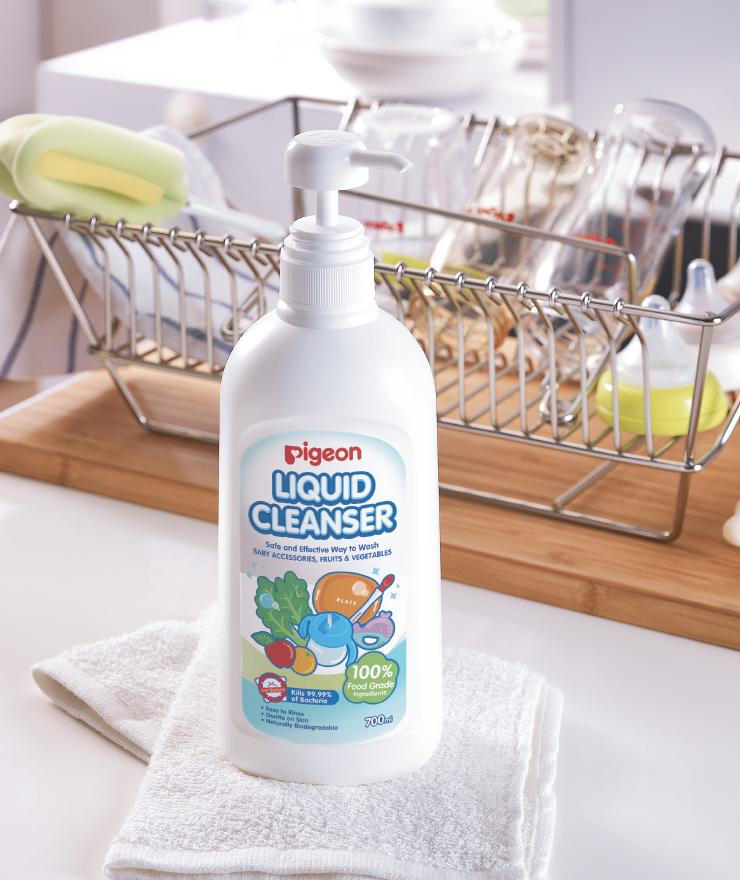
In this comprehensive guide, we'll walk you through the world of baby bottle sterilisers, baby safe cleaning products, and baby laundry detergents – essential tools to maintain a hygienic environment for your precious bundle of joy.

Learn more
Baby Feeding Glossary - Your Ultimate Guide to Baby Feeding Terminology babies

Baby Feeding Glossary - Your Ultimate Guide to Baby Feeding Terminology

As new parents, it's easy to feel overwhelmed and unsure of what is truly essential for feeding your little one. So to help, we've crafted this glossary to to help you determine the necessary essentials to ensure your newborn is well-fed.

Learn more
pigeon plastic baby bottles

Glass vs. Plastic Baby Bottles - What's the Difference?

When it comes to choosing baby bottles, parents often find themselves faced with the decision between the best type of material to use. In this article, we'll explore the key differences between glass and plastic baby bottles, enabling you to make the best decision for your little one.

Learn more
pregnant woman packing hospital bag

Pack Your Hospital Bag With Pigeon

  As a first-time mum, the thought of packing your hospital bag can be both exciting and daunting. What should you pack? What will you need? And when should you actually start prepping? To help you plan ahead, we’ve put together a list of what we think are the essential items, so you can have a comfortable, stress-free stay while you welcome your baby into the world. Hospital bag options Firstly, it helps to separate certain items in different bags, so you may want to start with one large bag to house 3 smaller ones. • One bag will be for your clothes and everything you need pre and post labour and birth.• One bag for baby items.• One bag for snacks and entertainment items. It’s also handy to keep one soft bag to put all of your dirty laundry in. You’ll most likely be in the hospital from 1 to 5 days, depending on whether you’re having a cesarean or vaginal birth. But given anything can happen, it’s best to prepare for both.  Items to pack for you 1. Comfy clothes Pack loose-fitting, soft outfits, including a robe, slippers, and flip flops to walk around the maternity ward in.  If you’re having a c-section, get yourself some soft, seamless underwear that will sit above your incision line. 2. Toiletries Your body will need extra TLC during and after birth, so pack some face cleanser wipes (so you don’t have to get out of bed), toothbrush and toothpaste, moisturiser for your face and body and some deodorant to freshen up. 3. Breast pads Breast leakage is one of the common things that happens when your milk comes in. So it’s essential to have some breast pads packed and ready to go. ComfyFeel™ Breast Pads are super absorbent and lined with aloe vera extract to improve skin moisture. They’re dermatologically tested and ultra-soft for maximum all day comfort.  4. Maternity pads Maternity pads are essential for pre and postpartum fluids and bleeding. They’re longer, softer, and much more absorbent than regular pads. You may need to change your pad every 1-2 hours after giving birth, so you’ll want to buy at least 2 or 3 packs of 12. Bleeding should reduce over the next 2 days, and then can continue for 4-6 weeks. 5. Nipple cream If you are breastfeeding, be sure to get yourself some nipple cream. A good nipple cream can ease the pain and discomfort of breastfeeding and provides moisture to help heal or prevent dry, cracked, itchy, or even bleeding nipples during the first few weeks of breastfeeding. 6. Medication Make sure you pack all of the current medication that you’re taking so you don’t miss any days or doses. 7. Electronics Along with your phone, it’s a good idea to pack a laptop or iPad with movies pre-downloaded as the hospital wifi isn’t always great. And if you’re really looking to pack like a pro, add a powerboard and extension cord to your bag so you can plug in multiple devices and be able to reach them all with ease.  8. Snacks While the hospital will have you covered for meals, they won’t necessarily have all your favourites on the menu. Pack yourself some fruit and snacks, but remember to do this as close to the date as possible, so everything stays fresh.  9. A notebook and pen While it may seem ‘old school’, when you’ve just had a baby and the doctors are telling you a lot of important information, having a notepad and pen handy is a game changer. You’ll be able to quickly jot down things like check-up dates, doctor’s names, medications you may need and more, then when you leave the hospital, you can easily add everything to your diary. Items to pack for the baby 1. Anti-Bacterial wipes Unlike baby wipes, anti-bacterial wipes keep your baby’s items clean and sterilised. You can also use them to keep your hands hygienically clean before touching your baby.  2. Moisturising wipes While hospitals usually provide wipes, it’s always a good idea to bring your own, just in case your baby has sensitive skin. Pigeon Natural Botanical wipes are made with naturally soft and sustainable bamboo eco-fibers, minimising the chance of irritation when wiping your baby’s delicate skin. 3. A pacifier/dummy If you choose to use a dummy or pacifier to help soothe and comfort your baby, the MiniLight Pacifier is a great option. It is ultra-light and made from the softest of silicone to fit comfortably in your baby’s little mouth. 4. Nappies Hospitals will definitely supply disposable nappies for you, but often they come in one newborn size only. So if you know your bub might be on the smaller size, stock up on some smaller nappies to accommodate them. And if you’re trying out cloth nappies, bring a lot of them as it will be trickier to clean them without your washing machine. 5. Baby clothes Pack 2 or 3 sleepsuits and singlets for your baby to wear while you're in hospital. And if you know you’ll be there longer, pack a few more. You’ll also want an outfit for the trip home. Something that’s all-in-one and stretchy will be the most comfortable for your baby.  By taking the time to plan and pack your hospital bag in advance, you can ensure that you and your newborn are comfortable and prepared for the big day. For more tips and advice, check out our helpful Baby Hub blog. You can also find products for breastfeeding, bottle-feeding, oral care and more at our online store.

Learn more
baby sitting by the beach

8 Tips For Keeping Your Baby Cool on Hot Days

  Summer has arrived! And with summer comes warmer nights, muggy mornings and hot and bothered bubs. So, to help your little one stay cool and protected during those hot days, we’ve put together a list of tips and tricks for you to keep up your sleeve. 1. Keep your baby hydrated The first thing to note is that unlike adults, kids sweat less when they get hot, which reduces their ability to cool down.This makes it harder for us to know when they might need to step away from the sun or physical activity.  To avoid your little one overheating, try offering them a drink from their favourite cup or bottle!. A spout sippy cup is a great option as it has angled handles and a spill proof cross-cut opening, so no matter what they’re doing, at what angle, they’ll be able to stay hydrated. And for the bub? Try one of our Soft Touch PP baby bottles with fun and cute designs on them! 2. Swap your muslin wrap for a pram shade Most people feel that shading their little ones with a muslin wrap over the pram will keep them cool. Whilst it does block out the sun, it also blocks any chance of a breeze from reaching them.  Pram shades are a great solution, as they are typically made from lightweight fabric that’s designed to protect your little one from UV and insects, while allowing air to circulate in the pram. They also allow your baby to see out while you’re out, keeping them entertained on the go.  3. Get your baby a cooling teether Did you know that you can buy a teether that is designed to live in the fridge?  The Square Cooling Teether and Circle Cooling Teether from Pigeon are designed to ease the discomfort of teething, and doubles as a quick cool-down tool on hot days. Definitely worth adding to your cart! 4. Portable fans are a breeze To keep your bub cool while you’re on the move, try attaching a portable fan to your pram. Not only will it create a breeze on those muggy days, it’ll also create that lovely white noise to soothe your bub off to sleep. 5. Pack a spray bottle full of water A quick way to bring the temperature down is to spray your little one’s hands and feet with cool water. Sounds simple, and it is!  Simply fill a spray bottle (you can purchase at most supermarkets or salons), and either keep it in the fridge, or place some ice cubes in there. It’s a low cost solution that really works!  6. A cool bath before bed We all know how good a cool shower is before you wriggle into your fresh sheets at night - well the same applies for your baby.  Try giving them a lovely luke-warm bath with a natural, PH balanced baby body wash, followed by some time in front of a fan.  Once your little one is nice and comfortable, pop some light jammies on them or wrap them in a light-weight sleep suit. Nighty night. 7. Keep a washcloth in the freezer A quick and easy way to cool down your little one whilst at home on a hot day is to soak a few washcloths in cold water, and put them in the freezer. After just 10 minutes, they will cool down your baby from head to toe.. Plus, they stay cool for way longer than just a wet cloth. 8. Pump the air con There’s nothing worse than getting into a hot car on a hot day.  To avoid your bub being hit by a heatwave, turn the car on and pump the air con before you put them in. In just a few minutes your car will go from a desert to a delight.   Keep these tips handy for the next hot day, and you and bub will stay nice, cool and comfortable. And don’t forget, while you’re keeping your little one cool, you need to look after yourself too! So, pop in an extra water bottle, wash cloth and fan. Happy mum = happy bub. For more helpful info on all things parents and bubs, visit our blog hub page.

Learn more
baby being fed from a pigeon baby bottle

Finding the right bottle for you and your bub

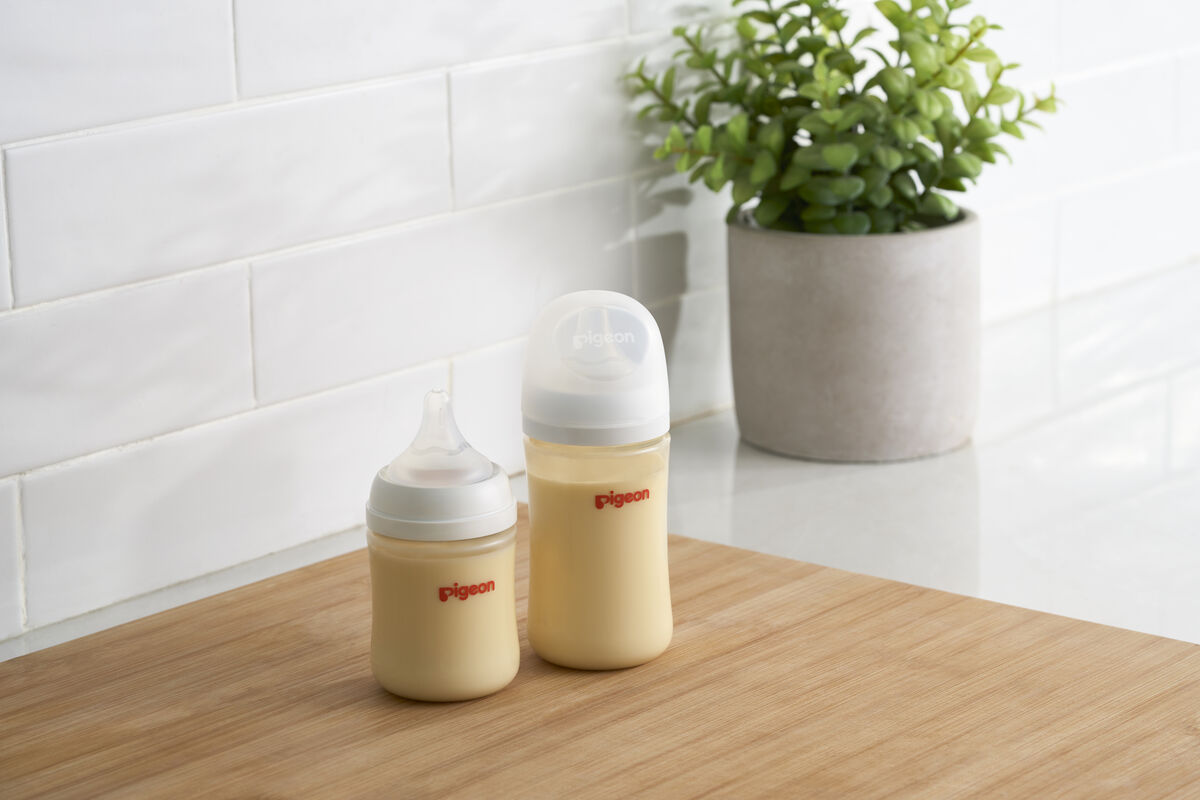
  Once upon a time, parents could only choose between glass or plastic bottles, and whether they’d prefer big or small teats. Today, we’re offered a variety of options, ranging from light-weight plastic baby bottles to teats with different flows. With so many options available, you may have no idea which bottle, teat or material that you and your baby will actually prefer. This can make choosing the right bottle more of a headache than a help!  But fear not, there are a handful of key things to consider to help you find the perfect fit. Baby Bottle Sizes & Materials  When it comes to bottle sizes, it all depends on the age, weight and situation you and your little one may face when it comes to bottle feeding.  mLs per age  On average, a newborn drinks about 45–90 milliliters every 2–3 hours. As your bub grows, this amount increases. For example at around 2 months, your baby may drink around 120–150 milliliters every 3–4 hours.  So when choosing your bottle size, generally, you will start around 160 milliliters with a super small teat for newborns, and increase to around 330 milliliters with a larger teat size when they’re around 6 months+. Bottle Material Most baby feeding plastic bottles sold today are "BPA-free”, which shows how far we’ve come since the old days, but what you may not know is that there are different types of plastics available.  Here are just a few: PP (polypropylene): A light-weight plastic that’s suitable for low to regular use, and is budget friendly. CLEAR PP (polypropylene): A clear, light-weight plastic that’s suitable for low to regular use. PPSU (polyphenylsulfone): A premium grade of plastic that’s naturally honey toned in colour and suitable for high usage.T-Ester: An innovative material exclusive to Pigeon, that has excellent glass-like clarity for better visibility, as well as high resistance to UV degradation.And of course there’s glass bottles which offers excellent transparency, high heat resistance and long term usage.   Teat sizes and holes  Similar to bottles, teats come in a range of shapes and sizes, depending on how old your baby is and how much milk-flow they require. For example for 0+ months you’ll want a slow flow teat, for 3+ months a medium flow, and for 6+ months, a fast flow. Here are a few of the Pigeon teats to help as a guide: SofTouch™ Peristaltic PLUS Teats A silicone bottle teat featuring a textured surface that’s perfect for latching on and ideal tongue position. The wide neck design is similar to the breast’s shape and helps reduce nipple confusion when combining breast and bottle feeding, or when weaning from breast to formula. They feature a unique Air Ventilation System (AVS™) to support constant milk flow and help reduce colic, and a latch-on line to guide parents on the correct latching position to encourage a success feed. They come in SS for newborns, S from 1 month, M from 3 months, L from 6 months, LL from 9 months and LLL from 15 months. Flexible™ Peristaltic Teats A silicone bottle teat with double thickness silicone to ensure softness and flexibility for latching on comfortably and easily. They feature a unique venting system to minimise swallowed air and help reduce colic. They are available in S for newborns, M from 4 months, Y from 6 months and L from 9 months. Teat Holes There are two styles of teat holes, and they make a big difference to your babies feeding experience:  Round hole teats are fast flowing teats, as if the bottle is held upside down, milk will drip out  without any sucking needed. This is perfect for young babies who have little jaw development as they don’t have to work too hard to get their milk, minimising frustration whilst feeding.  Cross cut (or Y-cut teats) are slow flowing teats. Unlike the round hole teat, milk is only released when the baby sucks on the teat. The Y cut is perfect for babies as they get older and have stronger jaw muscles. This allows the baby to control the flow of milk themselves as the harder they suck, the larger the opening expands.  3 Signs your Baby Needs a Bigger Teat Size Choosing the right teat size is essential for a smooth and enjoyable feeding experience. Here are three signs that it might be time to move up to a larger size: Frustration During Feeding: If your baby becomes fussy, impatient, or cries while feeding, it might indicate they're struggling to get enough milk. This can lead to frustration and longer feeding times. Extended Feeding Times: While feeding times can vary, if your baby is consistently taking more than 20 minutes to finish a bottle, they might be working too hard to extract milk from a slow-flow teat. Strong Sucking and Teat Collapse: Observe your baby's feeding cues. If they're sucking very hard or if the teat is collapsing inward, it suggests they need a faster-flow teat. Still struggling with fussy feeding? Visit our guide to How Air-Vented Bottles Can Help A Fussy Feeder.   View the full range of Pigeon SofTouch™ Peristaltic PLUS Teats and Flexible™ Peristaltic Teats.Remember: There is no one-size-fits-all timeline for changing teat sizes. Every baby is different and will develop their bottle feeding skills at their own pace. If you’re unsure if it’s time to move up a size, consult your paediatrician for guidance.   Special-Needs Babies Babies born with cleft palate & lip can find it difficult to correctly latch on to a bottle teat, as the mouth can’t be closed off from the nose.  Pigeon offers a unique nursing bottle that is specifically designed for babies with cleft palate & lip. Still unsure what to buy? Take our quiz to help choose the best Pigeon bottles & teats for your baby. For more helpful info on all things mum and bub, visit our blog hub page.

Learn more
Pigeon SofTouch III baby bottles

Introducing the New & Improved SofTouch™ Bottle & Teat Range

  Designed from over 60 years of breastfeeding research, we’re excited to announce our new SofTouch™ bottle range. With the same functions as you know and love, our new SofTouch™ III Bottles & Teats have been improved to encourage a smoother feed from breast to bottle.  Our SofTouch™ III bottles were created to support mothers to continue breastfeeding for as long as they want. The design of our teats mimics the natural drinking pattern of a baby drinking from their mother’s breast by promoting the same 3 feeding movements - latching, sucking and swallowing.  As with all of our SofTouch™ III range, our teats come with an air ventilation system that adjusts air pressure inside the bottle to support constant milk flow and helps reduce the chances of colic.  So, how have our bottles & teats been improved? We’re glad you asked. Seamless switching between breast to bottle The new SofTouch™ III teats have two main new features that encourage a seamless switch for a baby between their mother’s breast to bottle. 1. Latch-On Line The latch-on line is a guide line on the teat which helps new bottle-feeding parents to know where the baby should be latching on the teat. A secure latch to the teat is crucial to successful feeds as it prevents milk leakage and promotes efficient milk intake. 2. Skin-like Teat We’ve made our teats even softer which makes the feeding experience even closer to a mother’s breast. How? The soft silicone rubber allows the baby to complete smooth peralisatic tongue movements, similarly to the natural feeding experience, which reduces nipple confusion when combination feeding.  If you’re already a Pigeon SofTouch user, you’ll be happy to know that our new teats are 100% compatible with all SofTouch™ bottles. It’s what’s inside that counts Our SofTouch bottles are now available in 4 different materials, so you can pick the material that best suits you and your baby needs. 1. PP Bottle Made from light-weight plastic, the SofTouch™ III PP bottle is suitable for low to regular use and is BPA and BPS free. Bottles in the PP material are available in plain or with designs. All bottles are BPA and BPS free.  2. PPSU Bottle Made from a premium grade of plastic, SofTouch™ III PPSU bottles are naturally honey toned in colour and suitable for high usage.  Bottles in the PPSU material are available in plain or with designs. All bottles are BPA and BPS free.  3. Glass Bottle The SofTouch™ III Glass bottle is perfect for transparency and will last years and years for unlimited usage. All bottles are BPA and BPS free.  4. And introducing, T-Ester A new and innovative material, T-Ester, used for our SofTouch™ III bottles that provides premium clarity (similar to glass) and has a stronger resistance* to UV degradation compared to other plastics.  *After 100 hours continuous UV sterilisation, T-Ester remains unchanged Bottles in the T-Ester material are available in plain or with designs. All bottles are BPA and BPS free.  Explore the new SofTouch™ range of bottles and teats today.Interested in more motherhood tips and tricks? Visit our guide to Supporting your Baby's Emotional Growth.

Learn more