Baby Hub

Breastfeeding For New Mums
Inline with World Breastfeeding Week, we’ve created this breastfeeding guide to support new parents. Every year from August 1 to August 7, people around the world celebrate World Breastfeeding Week - #WBW2022. An entire week dedicated to highlighting the importance of breastfeeding and improving the overall health of bubs and mums around the globe. Before we go any further on this topic, we do want to do a quick shoutout to those who didn’t or can’t/couldn't breastfeed their baby. This week isn’t designed to make you feel inferior, but simply to encourage and educate governments, health systems, workplaces and communities to strengthen their capacity to provide and sustain breastfeeding-friendly environments for families. Let’s dive into all things breasts and feeding. What’s so great about breastfeeding? Besides the fact that women’s bodies are incredible and produce a complete meal for their baby, right from their breasts, breastfeeding also comes with a mountain of other benefits: • It can help you and your baby bond• It helps with bub’s brain development • It can protect your baby from infections • And, breastfeeding has many benefits for mums too! Including lower anxiety, increased bone strength, and decreased risk of heart disease How do you breastfeed? Although a natural part of motherhood, breastfeeding is no easy feat. It can take weeks, even months to get the hang of it, and it is so different for everyone. So, let’s start with some basics… How to hold your bub while breastfeeding? There really is no right or wrong way to hold your baby while breastfeeding. It all comes down to the position that you and your baby find most comfortable. Here are a few popular positions that you might like to try: 1. The cradle hold: In this position, you support your baby with the arm on the same side as the breast you’re feeding from. 2. The cross-cradle hold: In this position, you bring your baby across the front of your body - tummy to tummy. 3. The football hold: In this position, you hold your baby beside you, with your elbow bent.4. Side-lying hold: In this position, you lay on your side and face your baby toward your breast. How to know if your baby has latched properly? Sometimes it’s hard to know if your baby has latched correctly and the feed is going well. Here are a few things to look for: • The latch should not feel uncomfortable – it should be more of a tugging sensation• At first you should see short, rapid sucks. This is to stimulate your milk flow. Once milk starts flowing, your bub will suck more slowly and deeply • You should see your baby’s jaw moving, and hear swallowing. If you’re struggling with sensitive, cracked or sore nipples, Pigeon Natural Fit Nipple Shields are helpful for providing relief during feeds. They are thin and soft in design, are uniquely curved to maximise skin to skin contact, and suitable for all nipple shapes and sizes. Flat or inverted nipples Every nipple is unique. And sometimes a flat or inverted nipple can cause issues with latching. Our secret weapon is the Pigeon Nipple Puller which painlessly draws out your nipple, making it easier for your baby to find and latch on to. How long should you nurse on each side? A newborn will need to feed every 2-3 hours and usually spends 20-30 minutes on each breast. When your baby is around 3-4 months, they can empty a breast in a speedy 5-10 minutes! To pump or not to pump Pumping is a great way to get some freedom back when you need to be away from your baby for short periods of time, or just need a night off! It’s also a great way to help stimulate milk production in the early days of breastfeeding. There are two types of pumps you can choose from: • Manual Breast Pump: A hand operated pump that is used for one breast at a time. • Electric Breast Pump: A electric-powered pump that you can use on both breasts at the same time. Whichever way you pump, be sure to have some sterile milk storage bags or storage bottles on hand, so you can keep all that liquid gold stored safely in the fridge or freezer. Do you need to eat or exercise differently whilst breastfeeding? The general rules of thumb are: • Limiting your alcohol intake. Obviously no booze is the safest option • Try and exercise regularly for your mental health. ‘Me time’ is so important right now. • Eat everyday foods from all five food groups and increase your daily serves of veggies. • Drink more water - You should aim to have around 10 cups of fluids a day, but you might need more on hot or humid days or if you're very active. At Pigeon, we pledge to inform people about their role in strengthening the warm chain of support for breastfeeding in 2022. If you’d like to learn more about World Breastfeeding Week and see how you too can be involved, visit https://worldbreastfeedingweek.org/# And for more helpful info on all things mum and bub, visit our blog hub page. For additional support & information on breastfeeding 13HEALTH (13 432584) is a phone line that provides health information, referral and services to the public. https:// www.qld.gov.au/health/contacts/advice/13health Pregnancy, Birth & Baby Helpline 1800 882 436 (free call) offers free, confidential, professional information and counselling about conception, pregnancy, birthing and postnatal care. www.health.gov.au/pregnancyhelpline Child Health Service provides newborn drop-in services, early feeding and support, child health clinics. Refer to www.childrens.health.qld.gov.au/community-health/child-health-service for your nearest service Women’s Health Queensland Wide 1800 017 676 (free call) offers health promotion, information and education service for women and health professionals throughout Queensland. www.womenshealth.org.au Australian Breastfeeding Association 1800 686268 (breastfeeding helpline). Community based self-help group offers information, counselling, and support services, on breastfeeding issues http://www.breastfeeding.asn.au Lactation Consultants of Australia and New Zealand (LCANZ) provides information on when and how to access a lactation consultant https://www.lcanz.org/
Learn more
Baby-Safe Cleaning Products: How to Keep Your Baby Safe & Sanitised
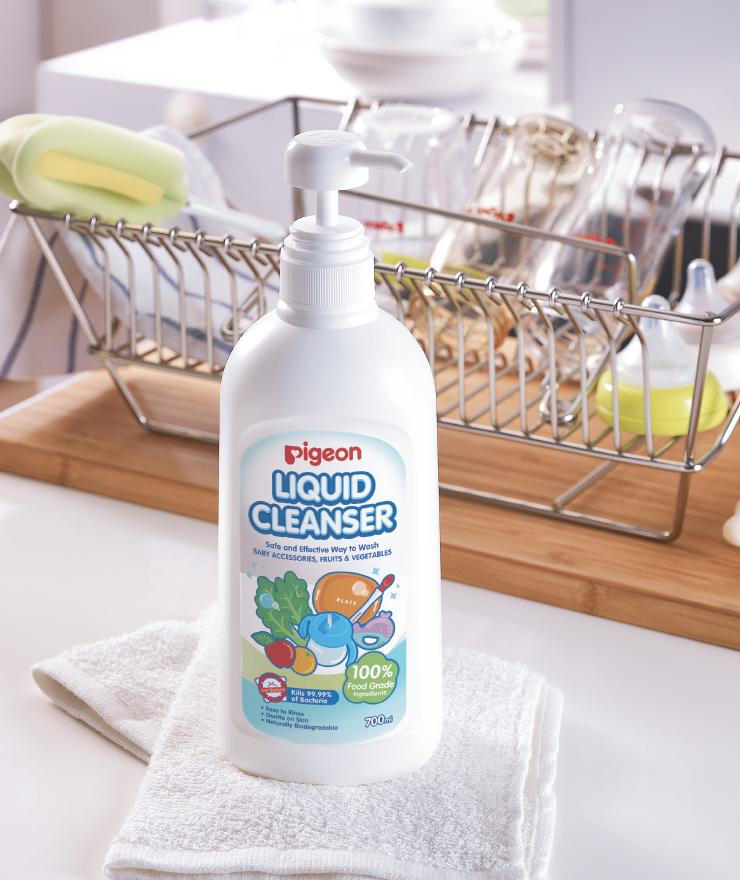
When it comes to cleaning your home and your baby’s products, it’s important to remember that what may seem safe for us, could be unsafe for your little one. A dishwashing liquid for example, could contain ingredients that are harmful if used to clean your baby’s bottles, however, works a treat on our drinking glasses. A disinfectant spray may kill bacteria like a boss, but could be harmful if it comes into contact with your baby's skin. So how do you know what’s OK to use and what to avoid? *Cue magical music* Look for naturally-derived, baby-safe ingredients When choosing a cleaning product for you and your little one, the key things to look for are naturally-derived, baby-safe ingredients that are free from harmful chemicals and toxins. In addition to that, seeking out products that contain biodegradable ingredients means you’re not only looking after your family but the planet at the same time! Pigeon’s Liquid Cleanser (Original & Yuzu) is a multi-purpose cleaning product which can be used to wash your baby’s bottles, teats, toys and even fruit and veggies! It effectively kills 99% of bacteria, is formulated with 100% food grade and naturally biodegradable ingredients; so it’s safe for your little one, and gentle on the planet. Plus, the baby-safe liquid cleanser smells great and is tough on milk residue and stains! Use a baby-safe laundry detergent If you have a little one with sensitive skin, you should look for washing products that are formulated for babies, fragrance-free and dye-free. Pigeon’s Baby Laundry Detergent is designed to wash away dirt, grime and everyday mishaps, without causing irritation to your baby’s skin. It’s anti-bacterial, paraben-free, dermatologically tested and safe for everyday use. Brush up on hygiene Finding the right brush to clean your bottles and teats is a must. Things you’ll want to look for are easy to grip handles (you’ll most likely be trying to wash with one hand while holding bub in the other), bristles that can get into all the little hiding places and optional brush sizes. Two magic wands that are essential for any homes that have baby bottles, are our 2 in 1 Bottle & Nipple Brush and Baby Bottle Sponge Brush. The 2 In 1 Bottle & Nipple Brush is long-lasting with proven efficacy for at least 10,000 strokes, whereas, the Baby Bottle Sponge Brush is a soft cleaning option that minimises scratching. Both bottle brushes will equally leave your bottles and teats clean and ready for sterlisation. Wash your hands It’s pretty textbook these days, but still important to remember how easy it is to contaminate equipment just by touching it with unclean hands. So, just to be on the safe side, make sure you wash and dry your hands before you handle any sterilised bottles and teats. Our hand sanitiser range is the perfect for keeping yours, and your little ones hands clean if your busy or on-the-go. We have a hand sanitiser cream and spray that is suitable for babies, and a hand santisier gel for adults. Sterilise, sterilise and did we mention sterilise? Babies have immature immune systems, and aren’t strong enough to fight off a range of infections. Milk (unfortunately) is the perfect breeding ground for bacteria to grow if not handled correctly. This is why it’s important to sterilise all feeding equipment and keep the milk/formula cold until just before feeding your baby. There are several ways to sterilise your baby bottles such as boiling, sterilising Chemicals, UV sterilisation and steam sterilising. Steam sterilising is an option many parents around the blog choose as it is an effective and easy option. The Pigeon Microwave Steam Steriliser provides a simple and easy way to effectively sterilise your baby’s bottles, teats and accessories. It fits most sizes of nursing bottles and accommodates up to 5 standard or wide neck Pigeon bottles. Just pop your products into the steriliser, put it in the microwave for 7 mins and it can maintain a sterile environment for up to 24hrs (given the lid hasn’t been opened). At Pigeon, we have all your baby cleaning needs covered. Shop our baby-safe cleaning products. For more helpful info on all things mum and bub, visit our blog hub page. Ingredients to avoid Unfortunately, most ingredients sound like chemicals, so knowing which ones are potentially harmful is tricky. Here is a quick list of ingredients that are best to avoid where possible: Artificial fragrancesOften contain phthalates, parabens, and other chemicals. Synthetic preservativesFor example, methylisothiazolinone (MI), methylchloroisothiazolinone (MCI), Benzisothiazolinone (BI) and Octylisothiazolinone (OIT). TriclosanOften used as a disinfectant and/or preservative. Dyes or colorsCan contain petrochemicals or harmful chemicals. Ethanolamine compoundsListed as Monoethanolamine (MEA), diethanolamine (DEA) or triethanolamine (TEA); cheap surfactants. Glycol ethers2-Methoxyethanol, 2-Ethoxyethanol, 2-Butoxyethanol - used as solvents in many cleaning products. Chlorine and chlorine bleachVery common in a variety of cleaners.Ammonia and ammonia compoundsCommon in glass cleaners, but also some dish soaps. FormaldehydeStill found in some cleaning products believe it or not, like laundry detergents and dish soaps.
Learn more
Baby Hygiene Tips: Keeping your baby clean and happy from hair to toe
When it comes to keeping our little ones clean and protected, there's often a long list of things we consider before buying a product. Things like ingredients, if the products are pH balanced, gentle on sensitive skin and our environment. And just like every one of our children, every personal care product is different, so which ones should you use for what purpose? Here’s our list.
Learn more
How to choose the right baby products for your newborn
Preparing for a newborn is both exciting and intimidating, especially when it comes to finding the essentials. Here’s a guide to help you choose what you will need.
Learn more
How to Choose Your Baby's First Bottle
Choosing your baby's first bottle is more than just picking something off the shelf. From teat types and bottle materials to preventing nipple confusion, here at Pigeon we help you navigate every decision. Discover our five essential tips for finding the perfect bottle for your little one.
Learn more
Breastfeeding to Bottle
Transitioning from breastfeeding to a baby bottle can be a scary time for parents, but there are ways to make the switch smoother.
Learn more
Baby Dental Hygiene Essentials
When those little teeth start to appear, it’s time to take a lesson in baby dental hygiene. So what do you need to know about baby teethers, toothbrushes and wipes?
Learn more
Healthy Mum, Healthy Bub
The science is in: So intertwined are the physical and mental health of mother and baby that the actions you take during pregnancy and after birth may have a direct impact on your bub’s overall wellbeing.
Learn more
Mum Guilt
In many ways, social media has made pregnancy, birth and the first few years of your child’s life a much more engaging experience for mums. After all, you can stay connected with friends and family throughout the journey, follow other inspirational mums on Instagram, and document your baby’s life from that initial scan right through to their first steps and beyond. But social media also has a dark side. It’s easy to get caught up in the race to be perfect, and feelings of ‘mum guilt’ can quickly creep up on us. The good news is you already have the tools in your arsenal to beat the guilt and get back to living your best life. Everyone has feelings of ‘mum guilt’ at some point in their journey If you’re a mum – or about to become one – it’s pretty likely you’ve already fallen prey to this awful feeling. Whether it stems from not spending time with your kids because you’re back at work, or feeling inadequate because (unlike those 'picture-perfect mums on Instagram), most of that mashed-banana-and-carrot meal is splattered on the floor instead of nourishing your baby’s belly. One of the least-desirable consequences of our content-driven culture is that we often feel like we’re not doing a good enough job at being parents. It’s a completely understandable – and common – feeling, but that doesn’t mean it’s rational. In fact, the guilt you’re feeling is doing you and your bub more harm than good. So what can you do about it? Get to grips with exactly what ‘mum guilt’ means Mum guilt is a psychological response to the pressures that society places on mums and the resulting pressures that mums place on themselves, especially for working mums who are away from their children for extended periods. Dad guilt is incredibly common too, and it could be something both partners are experiencing at the same time but are too afraid to talk about. Left untreated, this guilt can manifest in a variety of much more serious issues, such as anxiety, depression and negative coping mechanisms like drinking and drug use. If you’re worried that mum guilt is affecting other parts of your life, call Beyond Blue on 1300 22 4636. Use these tips to beat mum guilt for good Guilt isn’t always a bad thing: In small doses, guilt can reveal exactly what makes you a great parent. How? By showing how much you care. So instead of always fighting the guilt, accept that it’s a normal feeling and that, despite your best efforts, you aren’t always perfect. Trust yourself: You’ve spent decades making choices that have led you to this exact moment. And that little bundle of joy? That was something you created, so trust that you have the ability to make good decisions. Focus on what makes you an amazing mum and ignore the negative self-talk (this may take a bit of practice!). Change your perspective: Accept that you can’t be all things to everybody. That means rather than feeling guilty because you can’t be with your child at all times, start to really appreciate the time when you are together. If you’re feeling guilty about working, think of the example that you’re setting for your child. They see you as a strong, capable and independent role model to look up to. And most importantly, remember that while being a mum may be the best part of who you are, it isn’t all that you are. Take care of yourself: Just like babies have love cups, so do you. Investing in your mental and physical wellbeing will positively impact what you’re able to give back to your family. After all, if you can’t love yourself, how can you truly love anyone else? The most important takeaway is this: looking after yourself doesn’t make you selfish or a bad mother – quite the opposite. Ask for help: Your baby might be the most intelligent, adorable and well-mannered kid in the whole world, but that doesn’t mean they won’t drive you crazy from time to time. The good news is your friends and family would probably be delighted to spend some quality time with them. So whenever you’re feeling a little deflated or run off your feet, reach out to your support network. It’s not only great for your mental health, but it will also expose your child to different people and new situations. Not even the biggest mumfluencers on Instagram are perfect, and they’re certainly not around for every waking moment of their child’s life. So rather than feeling guilty, focus on what’s most important: being a happy, healthy and well-rounded mum who’s a positive role model for your child. While you’re focusing on self-love, you can also make your parenting life a bit easier with some handy products – whether you’re expressing with the GoMini Double Electric Breast Pump, breastfeeding, or teaching your little one about good dental hygiene.
Learn more