Those tiny bottles, teats, and pump parts can take over your kitchen sink faster than you ever imagined. And with so much daily washing, many parents start wondering: Do you really need a special detergent to clean baby bottles? After all, dish soap is designed to cut through grease, surely that’s enough, right?
Not quite. While regular dishwashing liquid works wonders on your dinner plates, baby bottles and feeding gear need a gentler touch, one that’s powerful against milk residue but safe enough for the most sensitive mouths.
Let’s explore why baby-specific cleansers exist, what science says about food-grade cleaning, and how to make bottle cleaning simpler, safer, and more effective.
Why Choose a Baby-Safe Bottle Cleanser?
Feeding equipment comes into direct contact with your baby’s mouth several times a day, so the products you use to clean it matter. Regular dish detergents can leave behind chemical residues or strong fragrances not designed for baby ingestion.
Parents often choose baby-safe cleansers for three key reasons:
- Residue concerns – Regular detergents may contain surfactants and fragrances that cling to bottle surfaces, even after rinsing.
- Sensitivity – Babies’ developing immune and digestive systems are more sensitive to residues that adults can tolerate.
- Milk buildup – Milk proteins and fats can cling stubbornly to bottles, and not all dish soaps are formulated to break them down efficiently.
Here at Pigeon, we understand how much time parents spend cleaning and caring for their baby’s feeding essentials and how important it is to do it safely. That’s why we created our gentle, food-grade cleansers, designed to be tough on milk residue but kind to delicate skin and tummies. Made with food-grade ingredients, they’re safe for anything that may go straight into a baby’s mouth, yet powerful enough to remove formula, breastmilk, and bacteria, without leaving anything behind.

What Science Says About Food-Grade Baby Bottle Cleansers
The concept behind baby-safe cleansers isn’t marketing hype, it’s about chemistry and safety. According to Australian health and consumer safety guidelines, cleaning products designed for infant use should use biodegradable, non-toxic, and food-grade surfactants to ensure no harmful residue remains after rinsing[1].
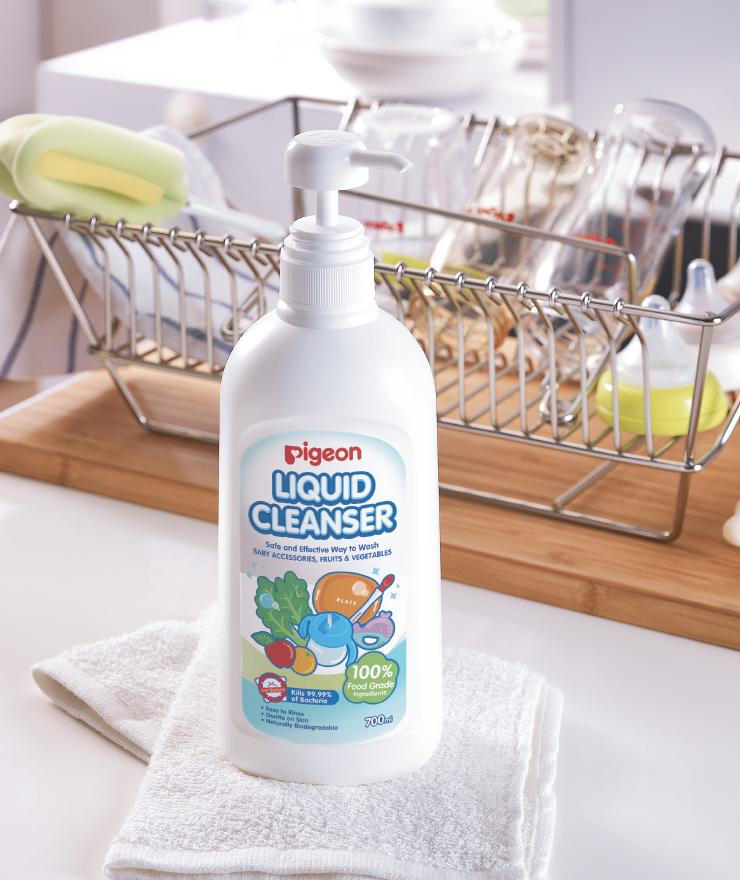
Pigeon’s Natural Botanical Liquid Cleanser and Cleansing Foam Spray are both made with 100% food-grade ingredients and are dermatologically tested for safe use around babies.
- The Liquid Cleanser is designed for deep cleaning - ideal for bottles, teats, breast pump parts, and even fruits and vegetables.
- The Cleansing Foam Spray offers quick, rinse-free convenience for toys, highchairs, and on-the-go cleaning, killing 99.99% of bacteria without harsh chemicals.
Can I Use Regular Dish Soap to Wash Baby Bottles?
You could, but it’s not ideal.
What’s the difference between baby bottle cleansers and dishwashing liquid?
Most dish soaps contain fragrances, dyes, and degreasers designed for tough kitchen messes, not for items that go directly into a baby’s mouth. Even a small amount of leftover detergent can irritate a baby’s digestive system or alter the taste of milk or formula.
Whereas baby bottle cleansers are pH-balanced and formulated to rinse clean easily, which reduces the risk of residue. They’re also tested for food safety, which standard dish detergents are not.
Can I Use the Same Cleaner for Bottles, Toys, and Highchairs?
Yes, as long as the cleaner is multi-purpose and baby-safe. The Pigeon Cleansing Foam Spray is a perfect example of a versatile, all-in-one solution. It’s gentle enough for bottles and pacifiers yet strong enough to kill bacteria on toys, feeding chairs, and play surfaces.
Because it’s made with food-grade ingredients and is rinse-free, parents can clean quickly and confidently without worrying about leftover residue.
For a deeper clean at home, the Pigeon Liquid Cleanser is your go-to for soaking bottles, teats, and pump parts, while still being safe enough to use on fruits and vegetables.

How to Clean Baby Bottles Safely?
Follow these expert-backed steps for hygienic, baby-safe bottle cleaning:
1. Rinse immediately after feeds to prevent milk residue from drying.
2. Wash thoroughly with a food-grade cleanser and warm water.
3. Use a dedicated bottle brush to reach inside corners and teats.
4. Rinse with running water until all suds are gone.
5. Sterilise regularly, especially for babies under 6 months[2].
For extra convenience, use the Cleansing Foam Spray for quick surface wipes and the Liquid Cleanser for deeper washing.
Baby Bottle Cleanser vs Regular Dish Soap
| Feature | Baby Bottle Cleanser | Regular Dish Soap |
|---|---|---|
| Ingredients | Food-grade, non-toxic, free from dyes & fragrances | Contains surfactants, perfumes & dyes |
| Residue Risk | Low — rinses clean and safe for baby items | High — may leave chemical residue |
| Use Cases | Bottles, teats, toys, highchairs, fruits | Plates, pots, pans |
| Safety | Dermatologically tested, food-safe | Not tested for infant ingestion |
Customer Reviews
“Works really well!”
“I was generously given a sample of this cleanser from Pigeon and overall I’m very happy with it! The formula my son uses can leave a milky film on bottles, and this cleanser cuts through it so easily. No smell left behind, will definitely repurchase!” - Chelsi, Pigeon Liquid Cleanser“Just as good as the liquid cleanser”
"I’m a big fan of the liquid cleanser, so I thought I’d give this baby bottle Spray a try. It works really well for quick cleans and wipe-downs. Just like the cleanser, it doesn’t leave any chemical smell, and you don’t have to spend ages wiping to make sure everything’s clean." - Jane, Pigeon Bottle Cleansing Spray
When Should I Switch to a Baby-Safe Cleanser?
You can start from day one. Babies’ feeding items should always be cleaned with a product designed for their safety, especially in the first 6 months when their immune systems are still developing.
Many parents continue using baby-safe cleansers well beyond infancy for cleaning toddler cups, lunchboxes, and toys.

Baby Bottle Cleaning FAQs
Do I really need a special detergent for baby bottles?
Yes, because regular dish soap can leave chemical residues that aren’t safe for ingestion. Baby bottle cleansers are food-grade and designed for delicate use.
Can I use the same cleanser for fruits and vegetables?
Yes, Pigeon’s Liquid Cleanser is made with 100% food-grade ingredients, making it safe for cleaning baby bottles and fresh produce.
How often should I clean baby bottles?
After every feed. Always wash, rinse, and sterilise regularly to prevent milk buildup and bacteria growth.
What’s the safest way to clean baby bottles?
The safest way to clean baby bottles is to wash them thoroughly with warm, soapy water using a food-grade baby bottle cleanser, then rinse and sterilise. Start by rinsing bottles and teats immediately after feeding to prevent milk residue from drying. Make sure to wash each part separately with a dedicated bottle brush and a gentle, non-toxic cleanser.
What’s the difference between the Liquid Cleanser and Foam Spray?
The Liquid Cleanser is for deep washing (bottles, teats, pumps), while the Foam Spray is a quick, rinse-free option for on-the-go cleaning of toys and surfaces.