You've probably done the research. You've read the reviews, picked an anti-colic bottle, and hoped its venting system would settle the evening fussing, the drawn up knees, the feed that ends in tears rather than a full, content baby. Anti-colic bottles are marketed as the fix for swallowed air, wind, and general newborn feeding discomfort, and for some families, they help almost immediately. For others, the crying continues despite the anti-colic teat and venting design, and it's easy to start wondering whether you bought the wrong bottle, or whether the real issue is teat flow, feeding mechanics, or something else entirely.
Here's the part that often gets lost in the marketing. "Anti-colic" isn't a single guarantee. It's a design category that targets one specific mechanism: the amount of air a baby swallows while feeding. That's a real and common contributor to a fussy feed. It is not, however, the only one, and it isn't the same thing as colic itself, which paediatric researchers describe as having a range of possible causes, occurring in about 20% of infants and being more common in the first six weeks of life. [1]
At Pigeon, we design venting systems because reducing swallowed air is genuinely useful for a lot of babies. But we also think parents deserve a clear picture of what that feature can and can't do, rather than a promise that oversells it. Knowing the difference saves you from cycling through bottle after bottle when the real issue might be something a venting system was never built to fix.
This article walks through what "anti-colic" actually means, how air intake differs from feeding mechanics like teat flow and pacing, the signs that point to one or the other, and where a bottle like the Pigeon Flexible™ Curve Bottle genuinely helps.
If you've already tried a well reviewed bottle and it hasn't solved things, you're not alone, it's worth reading why some newborns struggle with bottles even the "good" ones, since fit matters as much as features.
What Does "Anti-Colic" Actually Mean?
In bottle design, "anti-colic" refers to features built to reduce the air a baby swallows during a feed, not a guaranteed cure for colic as a condition. Most anti-colic systems work through a valve or vent that draws air away from the teat and up into the bottle, rather than letting it mix into the milk your baby is drinking.
This matters because everyone, babies included, swallows some air while feeding. Usually it isn't a problem. Some babies swallow more air than others, or find it harder to bring it back up, and they might pull faces or seem uncomfortable as a result. A venting system is designed to reduce how much air gets swallowed in the first place. It cannot address discomfort that has a different source, such as an overly fast teat flow, a poor latch, or the ordinary crying peak that most babies go through in the first couple of months. [2]
If you're still working out the basics of what your newborn's feeding setup actually needs, our guide on what your newborn actually needs for bottle feeding is a good starting point before troubleshooting any one feature.
Are Air Intake and Feeding Mechanics the Same Problem?
Swallowed air is one possible contributor to a fussy feed, but feeding mechanics, meaning things like teat flow rate, latch and pacing, shape the whole feeding experience in ways a venting system simply doesn't touch. Getting clear on which one you're dealing with is the difference between a fix that works and one that doesn't.
How Do You Know Air Intake Is the Main Issue?
Air intake tends to be the bigger factor when you notice:
- Audible gulping or slurping sounds during the feed
- The teat isn't staying fully covered with milk, so your baby is drawing in bubbles along with it
- The bottle is held flat rather than tilted, letting air pool near the teat
- Discomfort that eases once your baby brings up wind
How Do You Know It's Feeding Mechanics, Not Air?
Feeding mechanics are more likely the cause when you see:
- Milk dribbling from the corners of the mouth, often a sign the flow is too fast for your baby's pace
- Frustration, pulling off the teat, or falling asleep mid feed, which can point to a flow that's too slow
- Coughing, spluttering or gulping that happens regardless of how the bottle is tilted
- Discomfort that continues even after a proper burp
If your baby is clicking, coughing, or repeatedly pulling off the bottle, it's worth reading why your baby clicks, coughs, or pulls off the bottle, since these signs usually trace back to flow rather than air.

What Are the Signs Your Baby's Discomfort Is Air Related?
Swallowed air tends to show up as symptoms that ease once the air is released, rather than discomfort that lingers throughout the feed. Young babies can swallow air when they're feeding, crying or yawning, and this is common from the newborn stage through to around three months, as the digestive system matures. If your baby swallows a lot of air when feeding or has trouble getting rid of wind, trying to burp them partway through and after the feed can help. [3]
Signs worth watching for include:
- Squirming, drawing the legs up, or arching shortly after a feed
- A visible easing of discomfort once your baby burps
- Hiccups, which are normal on their own and don't necessarily mean air is trapped
If burping doesn't seem to make a difference, that's a useful clue that air isn't the main driver of what you're seeing.
When Won't Anti-Colic Features Solve the Problem?
If your baby's fussiness comes from a flow rate mismatch, positioning during the feed, or the normal crying pattern most babies go through, a venting system alone won't change much. It's also worth knowing that the evidence for some common wind related interventions is thinner than parents are often led to believe. There is no strong evidence that burping itself lowers rates of colic or regurgitation in babies, even though it does no harm and can feel like a helpful step for parents and caregivers. Crying that peaks around six weeks of age and gradually settles as babies get older is a normal developmental pattern, not something a bottle feature is designed to resolve. [4]
This is why it's worth checking the basics first. A teat flow that's too fast for your baby's age, a bottle held at the wrong angle, or a feed that's rushed rather than paced can all produce symptoms that look a lot like colic but respond to a completely different fix.

How Does the Flexible™ Curve Bottle Support Air Management?
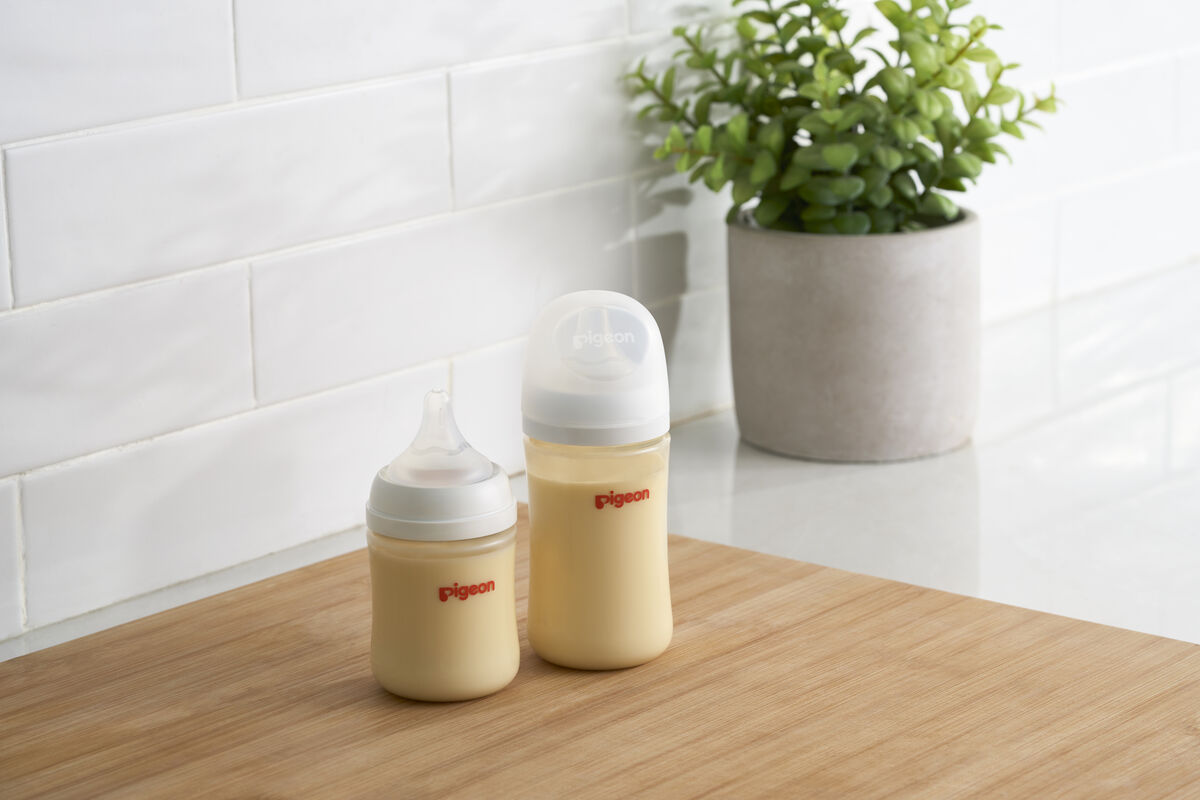
The Flexible™ Curve Bottle is built specifically to address the air intake side of feeding, through its shape, its teat design and its venting system working together, rather than any single feature on its own. The angled body is designed to keep the teat fuller for longer during a feed, which helps reduce the air your baby draws in as they suckle. Alongside this, the bottle uses a peristaltic teat, shaped to support your baby's natural, wave like tongue movement rather than a flatter sucking action, and its venting system works to draw air away from the teat and up into the bottle as your baby feeds.
The angled shape also has a practical benefit for you. It's designed to let you hold the bottle at a comfortable angle without straining your wrist, particularly useful during longer or more frequent newborn feeds. It comes in newborn suited 150ml sizes, including design variety in Forest, Garden and Home, as well as larger 250ml options in Space, Beach and Farm, so you can size up as your baby grows.
What Parents Are Saying
Favourite bottles
I love these bottles and have a dozen in the 150ml as well as a few larger ones. For feeding a newborn in particular these are great because the banana shape allows me to feed bub in an upright position against my chest whilst still getting a good latch. They feel great in the hand too. I would prefer more gender neutral designs as they’re all pretty girly but the baby doesn’t care. I have 5 other brands and every teat type but these are the ones baby prefer exclusively.
— Angela, PIGEON FLEXIBLE CURVE BOTTLE PP BEACH 250ML
What Else Helps Alongside Any Anti-Colic Bottle?
A venting system does its job best when it's paired with a teat flow and feeding pace that actually suit your baby, since the two work on different parts of the same problem. Choosing a teat size that matches your baby's age and sucking strength helps prevent the gulping or frustration that mechanics alone can cause, and our article on why feeding flow is important for newborns goes into this in more depth. Holding the bottle at a steady, slight incline, giving your baby short pauses during the feed, and keeping them upright for a little while afterwards all support comfortable feeding, regardless of which bottle is in your hand.
None of this means you need to overhaul how you feed your baby. It simply means treating a venting system as one part of the picture rather than the whole solution, so you're not left wondering why the "anti-colic" label didn't fix everything on its own.
Most fussy feeding settles with time as your baby's digestive system matures, and there's rarely a single cause behind it. If your baby is often unsettled after feeding despite trying different approaches, or if you're worried for any other reason, it's always worth checking in with your GP or child and family health nurse. You know your baby best, and a second opinion can offer real reassurance, even when nothing turns out to be wrong.
Feeding your baby comfortably is rarely about finding one perfect product. It's about understanding what's actually happening during a feed, and matching the right tools to the right problem.
Related Reading
- Why Does My Baby Click, Cough, or Pull Off The Bottle During Feeds
- What Does Your Newborn Actually Need for Bottle Feeding?
- Why Some Newborns Struggle With Bottles (Even the “Good” Ones)
- Why Feeding Flow is Important for Newborns

FAQs About Anti-Colic Bottles
Does an anti-colic bottle stop colic completely?
No. Anti-colic features are designed to reduce the amount of air your baby swallows while feeding, not to treat colic as a whole condition. Colic has a range of possible contributing causes, so a venting system can help with one piece of the puzzle without resolving every source of fussiness. If your baby is very difficult to settle, it's a good idea to check in with your GP or child and family health nurse.
How do I know if my baby is swallowing too much air?
Common signs include audible gulping during the feed, milk that doesn't fully cover the teat, and discomfort that noticeably eases once your baby burps. If your baby is also clicking, coughing, or pulling off the teat mid feed, it's worth reading why babies click, cough, or pull off the bottle, since that points more to flow than air.
What's the difference between an anti-colic bottle and a normal bottle?
An anti-colic bottle includes a valve or venting system that draws air away from the teat as your baby drinks. A standard bottle without this feature allows more air to mix into the milk during feeding. Both types can work well, and the right choice depends on how sensitive your baby is to swallowed air specifically, rather than fussiness in general.
Why is my baby still fussy even with an anti-colic bottle?
If the venting system is working as designed, the remaining fussiness may come from a mismatched teat flow, feeding pace, or a normal developmental crying pattern rather than air intake. Our guide on why feeding flow matters for newborns walks through how to check this.
Should I burp my baby differently when using an anti-colic bottle?
You can burp your baby the same way regardless of the bottle you use. There is no strong evidence that burping itself reduces colic or regurgitation, though it doesn't cause any harm and can still be a comfortable pause in the feed. Pausing partway through a feed to offer a burp is a reasonable habit either way.
Is the Flexible™ Curve Bottle suitable for newborns?
Yes, the 150ml sizes such as Forest and Garden are sized for newborns, while the 250ml options suit babies as they grow into bigger feeds. Pairing the right teat size with the bottle's venting design supports comfortable feeding from the early weeks onward.
Are SofTouch™ bottles also designed to reduce air intake?
Yes, the SofTouch™ range uses its own venting system alongside a wide neck design, offering a similar air management approach in a different bottle shape and teat style. Which range suits your baby often comes down to preference and how they take to the teat shape.